A Personal Canon
The Great Books of Myself

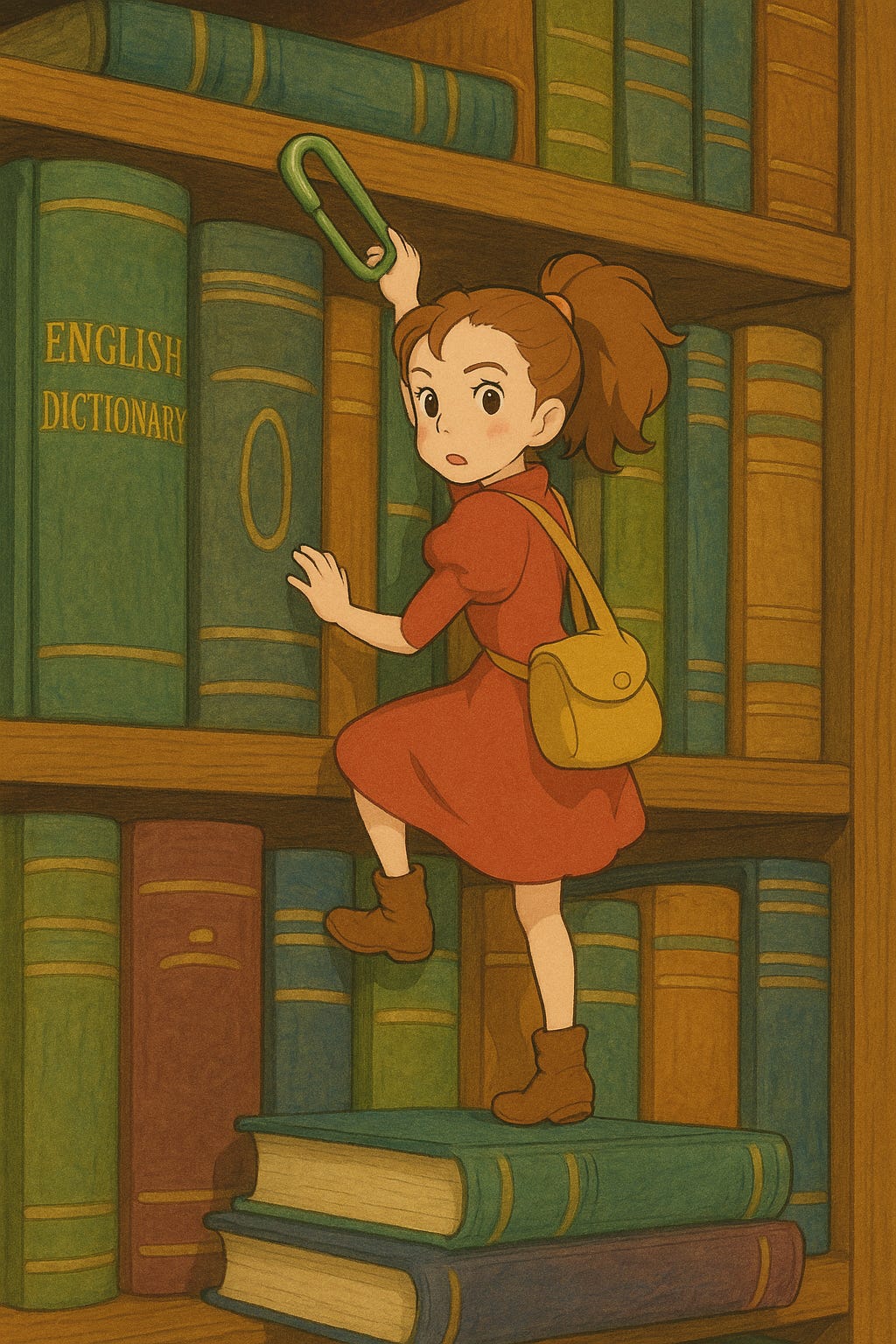
A few months ago, a friend asked me to put together a list of the greatest books. At the outset, this seemed like a simple request, but the more I thought about it, the more enormous the task became. I racked my brain trying to answer the question of what the greatest books are. There are great books, and then there are The Great Books. If someone asked me online or on the street what the great books were, I, like others, might recommend Harold Bloom’s The Western Canon or The Great Books of the Western World. There’s also The Modern Library and Harvard’s Five-Foot Shelf, though be warned, Charles Eliot did not include many women authors, and the selections are from before the early 1900s (so much progress has been made and so much more has been written since then). Even so, I found myself with a monumental task: What are the right books? What are the best ones? Which led me to ask, “What are the books that made me?” There are the great books, and then there are the books that affected me so deeply that they have informed my own canon. The Great Books of Myself, as it were.
My friend mentioned that she was not really into science fiction, yet so many of my most cherished stories are sci-fi because inherent in those stories are worlds that don’t exist but could. I like to imagine what a better world could be and then strive to make our little steps towards that outcome. That being said, I have curated the science fiction to some essentials without veering into the truly hard works (looking at you, Greg Egan). The longer I worked on this, the more expansive the list became, veering into all kinds of media.1 So, I set a deadline to get this written, lest I make this a comprehensive review of all the books I have read or want to read. Remember, the selections I have proffered are books that I have loved, but by no means should you, the reader, feel pressured to like any of them.
So many books have been instrumental in the formation of my opinions and paths in my life. I read Dune in seventh grade, and have since wondered at what is possible and occasionally recite the Litany Against Fear. If I had not read The Red Badge of Courage, I probably would have joined the military. Would I have been interested in economics if I had not read Thomas Sowell’s Conflict of Visions and Frederick Lewis Allen’s history of the Great Depression, The Lords of Creation, in my early 20s?
I must not fear.
Fear is the mind-killer.
Fear is the little-death that brings total obliteration.
I will face my fear.
I will permit it to pass over me and through me.
And when it has gone past, I will turn the inner eye to see its path.
Where the fear has gone there will be nothing. Only I will remain.

- Dune, Frank Herbert
Similarly, reading James M. Buchanan’s Calculus of Consent and Cost and Choice, and Elinor Ostrom’s Governing the Commons in my first year of grad school, as well as Tyler Cowen’s Stubborn Attachments in my second year, changed the trajectory of my research.2 All of a sudden, the problems I started working on were much bigger and had longer time horizons. In recent years, Karl Ove Knausgaard’s My Struggle has made me face the complicated relationships I have with my parents. The second book in the series is about Knausgaard’s metamorphosis into a father, allowing me to commune with him about the difficulties of parenthood. My Struggle is composed of six books, but I have only read the first two. The third is on the shelf by my desk, waiting to be consumed. I have chosen to chew ever so slowly on his words.
I was recently described as a “dyed-in-the-wool environmentalist.” At first, I was surprised to be given that description, but then, as I sat with it, I began to accept the mantle. With nature books, Rachel Carson, John Muir, Aldo Leopold, E.O. Wilson, and Robin Wall Kimmerer are considered essentials here, but I would suggest starting with Annie Dillard’s Pilgrim at Tinker Creek; the book immerses one into the natural world without degrowth moralizing. I read again and again the passages from Dillard’s book; they are so full of depth that I was unable to appreciate all of the aspects of a single paragraph during my first reading. Occasionally, I will check it out at the library just so I can dive back into a world full of life and wonder. My quest into environmentalism didn’t start with Dillard or Muir, but with Wendell Berry. I read his book, Our Only World, for a college class. His writing struck me, and his descriptions of life are moving. I still read his essays and prose often, even though I find myself disagreeing with his ideas more and more as I read. Gwyneth Cravens’ Power to Save the World is something I include here, as it started my work on nuclear energy. Recently, I read Jonathan Livingston Seagull at a colleague’s recommendation. It is on the line of religion and environmentalism, as so many of these books are. If only more of us could escape the flock and fly.
The very best writing has stood the test of time: “Macbeth’ and “Romeo and Juliet” still hit as hard as they did 400 years ago. The grievances of Plato are still echoed in our cultural and political conversations. Don’t sleep on the classics just because they’re old. “The Tempest,” “Hamlet,” “Julius Caesar,” and other selections from Shakespeare. (I admit to not having read enough Shakespeare.) Middlemarch by George Eliot, because she has immense compassion for her characters.
Read the letters and writings of John Stewart Mill, but don’t try to read On Liberty first or even second. Pride and Prejudice by Jane Austen. Uncover the life of 19th-century England with Charles Dickens; pick up Great Expectations, Bleak House, and Oliver Twist. Thomas Mann’s The Magic Mountain, translated by John Woods. A Separate Peace and Catch-22 have both stuck with me since high school. The Book of Disquiet by Fernando Pessoa. Find collections of poetry, peruse them, and remember which poets speak to you. Then you can dig deeper into their works. I like Emily Dickinson, Dylan Thomas, and William Butler Yeats, to name a few.
To make a prairie it takes a clover and one bee,
One clover, and a bee.
And revery.
The revery alone will do,
If bees are few.
- To make a prairie, Emily Dickinson
Read various religious texts such as the Bible, the Tanakh, the Quran, the Bhagavad Gita, Tao Te Ching, and so on. Get a sense for what other religions believe and their ideas. You’ll find the similarities across religions. For similar reasons, read philosophy. The greatest benefit of reading philosophy, other than learning frameworks by which to think, is that it inoculates you against other philosophies. Reading religious texts and political treatises does the same. Take on The Plague and The Stranger by Albert Camus for a glimpse of the Absurd. The Glass Bead Game by Herman Hesse, make sure to read the three stories at the end. The Brothers Karamazov, Spinoza’s Ethics (George Eliot translation), and Kierkegaard’s On Anxiety.
Science fiction has been a home to me most of my life; the worlds in this genre are limitless. Hyperion by Dan Simmons is unique, and you’ll find the expression of humanity in it rivals many literary fictions. The Dispossessed by Ursula K. Le Guin, in which a man flees an anarchist society to be accepted by a caste-based capitalistic society, only to find that all human systems have flaws. Also by Le Guin, The Lathe of Heaven asks, “What if your dreams could rewrite reality?” Try to understand that God is Change while undertaking The Parable of the Sower by Octavia Butler. Take a dive into Snow Crash, Vonnegut’s Slaughterhouse Five, Bradbury’s Fahrenheit 451 and The Illustrated Man, Lowry’s The Giver, and We, the book that preceded 1984 and A Brave New World.
All that you touch
You Change.

All that you Change
Changes you.

The only lasting truth
Is Change.

God
Is Change.

- The Parable of the Sower, Octavia Butler
Read books that come from other cultures, such as the Kalevala, Poetic Edda, Gilgamesh, and Shahnameh. The Greek myths and plays show us the complexity of life and interactions. The Odyssey, listen to the Emily Wilson translation, and take care to read the introduction. Wilson has a translation of The Iliad, as well, but I have yet to listen to it. I recommend Shadi Bartsch’s translation of The Aeneid. Remember to listen to epic poems or read them aloud.
We often take for granted our place in history; everything before seems to come from an irrelevant past, but in fact, the past was full of people who had similar experiences to ours, struggling against nature, injustice, and strife. We are not alone in this conflict. The opening of a book allows us to have a conversation with authors long dead, to understand their experiences, and to interpret our own experiences through their words. Try to grasp more history and how the world you know came to be. Places to start are 1491 and 1493 by Charles C. Mann, Guns, Germs, and Steel by Jared Diamond, and The Wealth and Poverty of Nations by David Landes. If you want more of a counterfactual, take on Seeing Like a State and Against the Grain by the late James C. Scott.
Read general histories of things; often, they’ll give you context for the broader world while providing in-depth information about the book’s topic. Context is often scarce. The Making of the Atomic Bomb by Richard Rhodes is perhaps one of the best in-depth topic-specific histories ever written. The Dream Machine contains a general history of computing while combining it with a biography of JD Licklider. The Quest by Daniel Yergin, there’s no history of the oil industry and energy quite like it. Even more nuclear specific, Command and Control follows the path of nuclear weapons logistics, and Restricted Data unravels the history of nuclear-related secrets.
It is a profound and necessary truth that the deep things in science are not found because they are useful; they are found because it was possible to find them.
- The Making of the Atomic Bomb, Richard Rhodes quoting Robert Oppenheimer
Be careful not to discount short stories and essays. I mentioned Wendell Berry above, but I would be remiss if I didn’t suggest Slouching Towards Bethlehem by Joan Didion (really all of Didion’s works except the posthumous collections). Read the short stories of Anton Chekov, particularly “The Student.” Hemingway’s “The Snows of Kilimanjaro.” In other short media, read George Washington’s farewell address and the first chapter of Carl Sagan’s The Demon-Haunted World. “The Lottery” by Shirley Jackson is a trip. (Not a short story, but Jackson’s Haunting of Hill House is also excellent.) Kurt Vonnegut’s “Harrison Bergeron” is something I return to again and again. The short story I think about the most is Kafka’s “Before the Law”.3
Try to read Finnegans Wake because you should stretch your mind to the limits of your language. Why? Your language functions as the base of your internal operations, the instruction set by which you understand the world. Orwell in 1984 got that right. Seek to go beyond those bounds. Ways to accomplish this are to leave the rules by reading ‘weird’ books, learning the rules of a different culture, learning another language, or going to the edge of English literature. James Joyce takes us to the cliff and gives us a feeling of vertigo as if we are going to fall into the void, a place of non-understanding and chaos. Camille Paglia’s Sexual Personae explores the chaotic and the orderly in her magnum opus on art. Don’t get lulled into a feeling of safety by reading only mainstream, “bestseller” novels; seek out the weird, the gritty, and the unsafe. Also, I haven’t been able to classify all the works I’ve been suggesting. A book I think about often, at least once a week, is UNSONG by Scott Alexander. Another is There Is No Anitmemetics Division by qntm.
These are some of the books, media, and ideas I have assimilated into my psyche. I cannot untangle myself from the books I have read, the music I have obsessed over, the rhymes and rhythms, the media I have consumed, taken notes on, and replayed or reread relentlessly. I wanted to place a personal touch, and in part, this was the story of self-discovery: what are the books that made me, and are they great? Many of the works here have been assimilated repeatedly and perused by countless others. On a broader scale, books are made great if they pass the tests of time, use, and relevance. Millions of books have been published, and you have the opportunity to read approximately 2,500 books in your lifetime. Choose wisely. Explore widely.
What books are in your personal canon?
Here no one else can gain entry, since this entrance was assigned only to you.

- Before the Law, Kafka
P.S. There are many books I did not include here, so many that I have enjoyed but could not fit into this essay. So, don’t consider this to be an exhaustive or comprehensive list. I merely scratch the surface. I hope some of these books speak to you. Let me know if they do.
Time Out by the Dave Brubeck Quartet. 5/4 is the best time signature.
The most influential economics texts end up being papers
There is no one interpretation of this story. I take a more traditional one in that I think the man is too scared to take action. He wastes his life away, does not sow seed for harvesting, or enable his talents. He gives up an unknown future. Do I think his future would have been easy? No, it would have been filled with trials, but the trials would not have been increasingly difficult because he would have learned and gained experience over the years. The trials of life do not come as an exponential function, requiring consistent grinding to eek out a few extra XP in hopes of some skill points. It is more complicated than that. For some, the most difficult part of life is their set of initial conditions: their birthplace, culture, permanent characteristics, family, etc. For others, life is a random walk: some things work out, others don’t, and one has to call an audible or pivot. Most of the time, experience accumulates, and problems get easier to solve, or you develop a friend group or connections that can help you move past them. The man before the law never developed those friendships or skills; he gave up too soon. Who knows what was beyond the next gate? A few gates in, and the paths may have branched. Some guardians may have been difficult, and others may have been no more than a chat. My dissertation was a much longer and more difficult affair than I ever dreamed, but unlocking my love of the outdoors took only a few hikes.
I also frequently think about ‘There is no Antimemetics Division.’ So devastating and hopeful.