Spoons
A Reflection on Fatherhood and Writing

Mike’s eyes grew wide, “So either you had kids really early or you are secretly old.” A shaved head and a beard give my age a bit of a mystery; I could be anywhere between 25 and 55. “The former,” I said, “my oldest was born when I was 20. He just turned 16.” Mike, the editor at the Roots of Progress Institute,1 was flabbergasted.
I am a father and a writer. Three boys, two of them already teenagers, the third not far behind. There are not many essays on the intersection of fatherhood and writing. I’ve searched. Men seem to avoid talking about it. For sure, many of them have left much of the household chores and child-rearing to partners, wives, nannies, screens, or others. Many others may avoid fatherhood entirely. My kids are my responsibility; they live with me 100% of the time. They can capture all of my spoons. Their biological mother is inconsistent at best and out of the picture the vast majority of the time. Even though I now have a wonderful spouse who loves the children dearly, the buck stops with me. It’s exhausting.
On a good morning, I’ll wake up, go for a run, and be back in time to get my middle schoolers up and off to school. My high schooler catches the bus not too long after. I am almost always the first person they see in the morning, and usually one of the last they see before going to bed. My writing, much like my morning runs, is a solitary endeavor. Time at the desk is a necessity. I try to schedule my writing around times that the kids need me or when they’re active. The system is not perfect; writing does not wait for the ideal times. I keep a couple of notebooks close by my side: my bullet journal and morning pages notebook are usually my go-tos. If I need to be less conspicuous, I’ll have my small, green Moleskine or a traveller’s notebook for quick notes and thoughts. My notes app is the last resort.
My writing, pursuit of an education, and career have taken me away from my children. In order to finish my dissertation, I had to spend 8-15 hours a week outside of work and home over the course of a year. I missed dinners, sports games, and bonding time. Determined not to let my writing muscles atrophy again, as they did for almost two years during my dissertation phase, I started writing morning pages a la The Writer’s Way. I no longer needed deep focus time in a coffee shop. I could do these pages within 30 minutes. I protect this time with extreme jealousy, sometimes getting upset with the kids for interrupting my flow. This is my time, it is all I am allotted.
Kids are attention wells, asking for more and more. Whatever you can give them, as many spoons as are available. As much as I do this for myself, I also do it for them. I have written myself out of poverty. My work, both academic and public, has lifted them out of a life of scarcity. The trade-off has been time spent away from them; maybe playing catch has to wait or the website can’t be built this weekend. Sorry, I have to focus. My kids tell me they would never want to become an economist: I work far too hard too often.
The Roots of Progress Fellowship has been like my dissertation, though the stakes are much lower. Five essays in ten weeks. My first couple of essays were close to 4,000 words each. How many games of Ticket to Ride is that? I find myself spending hours and hours writing, taking me away from family time, no matter how much I tried to write after the kids are in bed. I often rely on the labor of others; my spouse provides an unbelievable level of support for me. Many times, she has handled bedtime, so I could have a draft ready before the deadline

August 2009 was a different time for me. Two major things happened: my oldest son was born, and I quit my job as a shift manager at McDonald’s and started a new job at Pepsi making soda. It’s difficult to categorize that time of my life as good. The previous year, I had been academically suspended from college. Like many a 20-year-old, I was an idiot. Becoming a father, especially when I was so young, was terrifying. There’s no training for parenthood. Taking care of a whole human being because they have no ability to speak or advocate for themselves other than through crying is alien. Kids do have one byproduct: they shift your attention to a longer time horizon. All of a sudden, you are no longer the main character, and you need to be around for this child who needs you for at least 18 years and probably well into adulthood.
It’s no surprise that parenting involves sacrifice. However, one cannot become a servant parent, doing everything for the child. It’s not practical. I think the opposite end of the spectrum is those who ignore the needs of their children. I didn’t want to be that parent, but threading the needle, finding the balance of sacrificing my time and energy for them or for my own goals, is something I still contend with. My other boys were born over the next few years, one in 2011 and the other in 2013. I felt the struggle throughout the writing Fellowship. I spent time writing instead of spending time with them. When they were younger, and my goals less developed, the trade-offs weren’t as obvious. Back then, the struggle of adjusting to parenthood and life not going as I had intended, plus trying to find myself in all of this, took up so much of my energy. That, and I was working 12-hour shifts at Pepsi. The kids’ mother and I separated in 2014. It was best for the kids, we said. I’m not sure that it was actually true, but so much of parenting is experimentation and one-offs where you cannot know the counterfactual. Starting then, I saw my kids every other weekend for the next several years. All of a sudden, I had an increase in the amount of time on my hands.
During the same period of time, a couple of co-workers retired, and another one passed away. Signs were posted above their respective machines or working locations within the plant. “Chief’s Aisle” and “Dean’s Filler.” These were no doubt nice gestures on behalf of management, but I saw it as the Ghost of Futures Yet to Come. If I didn’t find another path, all I would leave behind was a plastic rectangle with vinyl lettering. I decided to finish my degree no matter the cost. A year later, I had finished my associates. Two years after that, my bachelor’s. Then I decided to keep the ball rolling and go to graduate school.
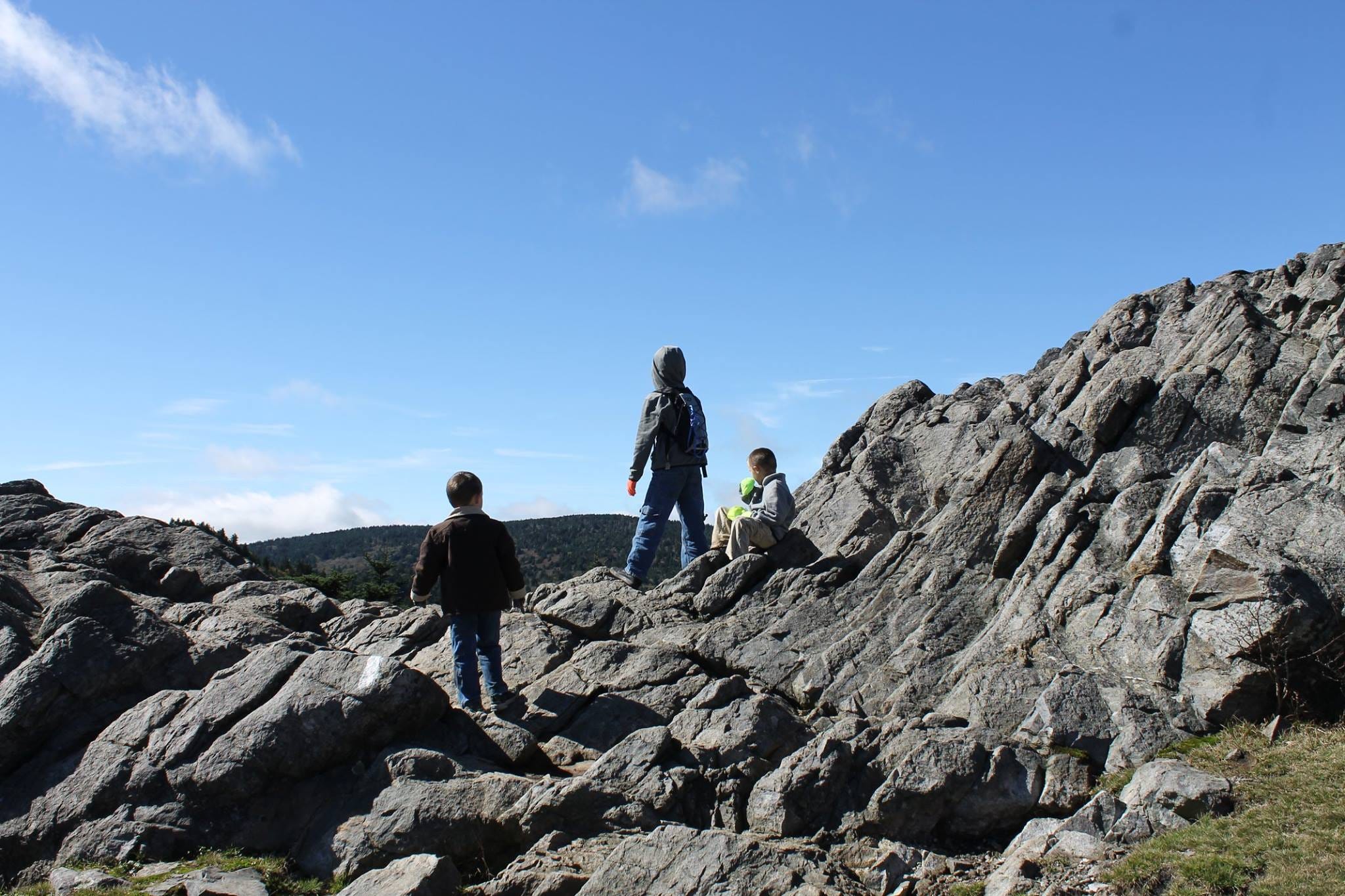
At that time, until I chose to go to graduate school, I saw many of these choices as trade-offs impacting only me, such as sleeping in my car in the community college parking lot between shifts at Pepsi and class or crashing in the lobbies of the various academic buildings at Radford between classes. Looking back, I know the real cost was to my children; I couldn’t be near them or spend time with them while I was pursuing my own goals. Sure, I saw them every other weekend, and sometimes in between. We often went camping in the parks of Tennessee and Virginia. At the same time, I was lifting myself and them out of poverty. I rejected my initial conditions. As an economist, I could figure out the cost-benefit analysis of the separate trajectories, but I’m not going to. I knew the choice to go to grad school would drive a wedge even further between the kids and me. I struggled with my decision; George Mason was 7 hours away. I would still be visiting them on weekends, but for the first time, the distance felt real. I went anyway, knowing truly for the first time that my choice to pursue my doctorate would have a negative impact on my children, at least in the short run. Were I actually successful in the long run, however, the benefits would be huge, or so I kept telling myself.
I didn’t know that just two years later, the kids would come to live with me, unexpectedly and full-time.

The practicalities of parenthood are overwhelming. Checking on chores, reading endless emails from school, going to baseball games, avoiding the endless emails from school piling in the inbox, wiping runny noses, trips to the doctor, and participating in Judo with my oldest (even though it’s caused so many injuries). Yet, in the deep, I feel the Dread of doing something wrong, maybe I’ll mess them up forever, combined with the need to be focused. The act of writing is solitary. To some extent, it is selfish. Ceases to be selfish when I publish it. I play catch. I cook dinner after dinner.
In a week, I’m flying to Berkeley to meet the other fellows and attend the Progress Conference. The morning of my flight, the kids have their biannual dental cleanings. I’ll be there. My pen strokes are trying to find their way to a better world. My kids understand this as well as they understand the Krebs cycle or the Haber-Bosch process. My pen carries me. I struggle with what I miss, but I enjoy my work. I enjoy writing; there are trade-offs, just ask any economist.
Sheryl Sandberg says to lean in, but we cannot do it all. I try to. Words for the living, speak for the living. Move the needle. Raise the children. The kids have seen the process from the outside, but do not understand my inner being. When they came into the world, I was working as a blue-collar laborer, and they do not comprehend the progression. My kids drive me crazy. Kids require attention and thought, time and effort, and money, oh so much money. But the money means little in comparison to time and attention. Writing doesn’t bring in money directly. I write as part of my job, requiring time and effort. More spoons.
At the center of all this, I have a conflict. I want to write, and I want to be a great parent for my kids, but time is finite. I don’t have the time to do it all. Writing consumes so much time. Not just getting the ink on the paper, but the editing. I spend hours and hours editing, revising, rewriting. I have to double-check the facts, make charts, and source images. All the while, I must earn money to keep all of this afloat. There must exist an imbalance. Life is full of imbalances. Writing is an especially heavy weight. Other activities can be made lighter by allowing the kids to join in. Watching sports can be done together. In choosing to be an imperfect parent and missing some things, I’m also balancing the short-term, the intermediate term, and the long-term. I cannot be a servant parent. I cannot ignore them. I make sacrifices. I have made sacrifices. There are some things I let Cris handle; if I didn’t have her, so much would be left undone. More sacrifices. These are things I’m willing to forgo for my writing; this is not a statement a mother could necessarily say. Yet, in their early childhood, do I have guilt?
In the fellowship’s orientation week, we had celestial dates in which we were supposed to meet and have deep conversations with another fellow. I was matched with Pouya, and he told me all about his life. Apparently, I gushed about my kids because Pouya told the other fellows that I was a wonderful father. Shame, pride, embarrassment, guilt, validation simultaneously flowed through me. I know the costs.
What will my children think of me? My kids will be on their way to college soon. Will they realize that I worked so hard for them? Will they see that even though I was not always there for every game, for every hit, every milestone, their lives are better off? I am there now, coaching basketball, I’ve led Cub Scout dens, and I show up day after day. Spoons stacked on top of each other. Cats in the Cradle. The kids came to live with me in 2020. Once again, I was not prepared for it, but it was necessary. I probably should have brought them to live with me beforehand; some harm could have been reduced.
The gamble I have been making this whole time is that my kids will understand that it was better for me to be away from them than to have stayed at Pepsi or to have stayed in Southwestern Virginia. Even if they don’t understand that now, I hope they do in the future. I could’ve stayed at Pepsi or not have pursued my education, and been present, but what kind of life would my kids have? The path I chose was not easy, neither for me nor my children, and even though I will never know the alternative, they are here with me now. In hindsight, I could have been a servant parent, but the spoon used to serve them would have been meager.
This essay was written as part of the Roots of Progress writing fellowship. Thank you to everyone who read it and provided comments.
Thank you for sharing your story, Deric. Incredibly powerful to hear your journey as a writer and parent